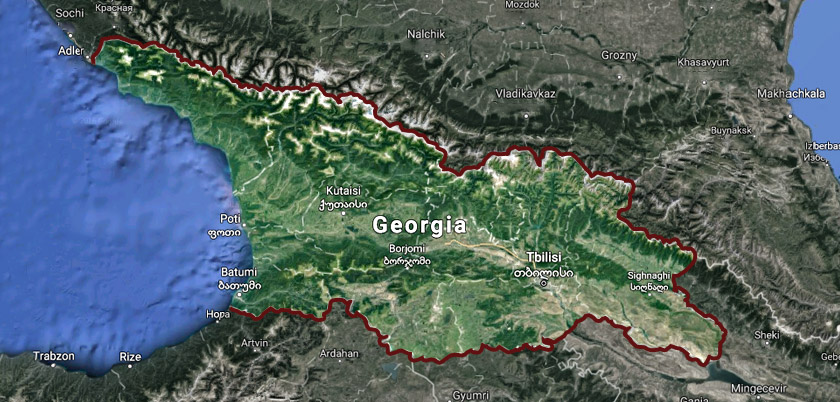
About the Founder
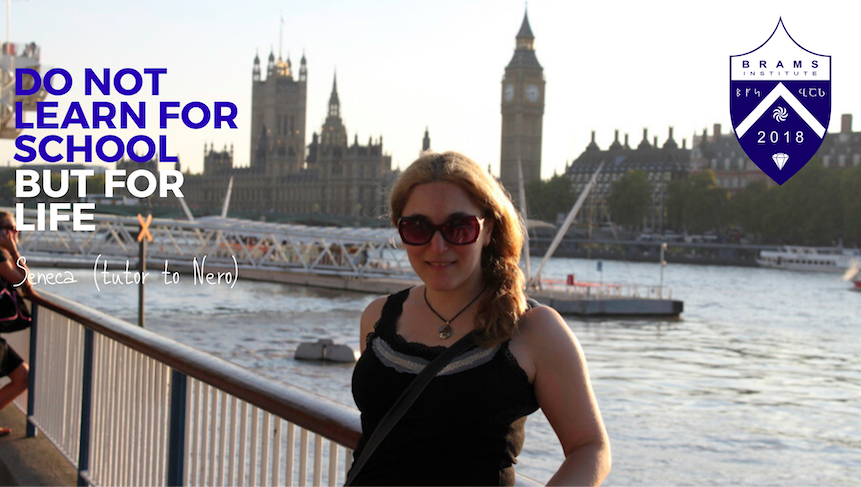
Professor Dr Maia Nadare founded Georgia’s first online academic research institute on 14 July 2018. With more than 20 years of interdisciplinary experience, she is an authority in American and global studies.
Dr Nadare earned a PhD in international journalism from Tbilisi State University in 2002 and was appointed academician of criminology at the Georgian Academy of Criminology in 2018. Her academic formation includes political communication, jurisprudence, English philology, international relations, and musical performance (piano and solo singing). Since completing her doctorate, she has led and contributed to projects in American studies, media studies, political communication, and criminology at several leading universities in Tbilisi, and regularly presents at international conferences in American studies, Georgian studies, and criminology. As CEO of BRAMS Institute, Dr Nadare has built a diverse scholarly network and prioritises international collaboration and student participation in institute projects.
Professor Dr Vasil Kacharava, President of the Georgian Association for American Studies, welcomed the institute as a significant addition to Georgia’s tradition of American studies. In a radion interview, he noted the long history of US interest in Georgia and described the institutional evolution of American Studies at Tbilisi State University from lab to centre, department, and finally institute: "Almost every American university has a centre for American studies. America is Georgia’s main political ally, and thus, our country needs to prioritise American studies. Interest in the United States has a long history in Georgia. The Institute for American Studies at Tbilisi State University has undergone various stages of development. Initially, a lab was established, which evolved into a centre; eventually, it became a department at the university, and finally, it transformed into an institute."
Dr Nadare acknowledges the foundational work of scholars such as Professor Gela Charkviani and Professor Vasil Kacharava. Building on that tradition, BRAMS advances British and American studies – including Commonwealth and post‑colonial contexts – through interdisciplinary, internationally engaged research.