17
Mar
Obituary: ILIA II
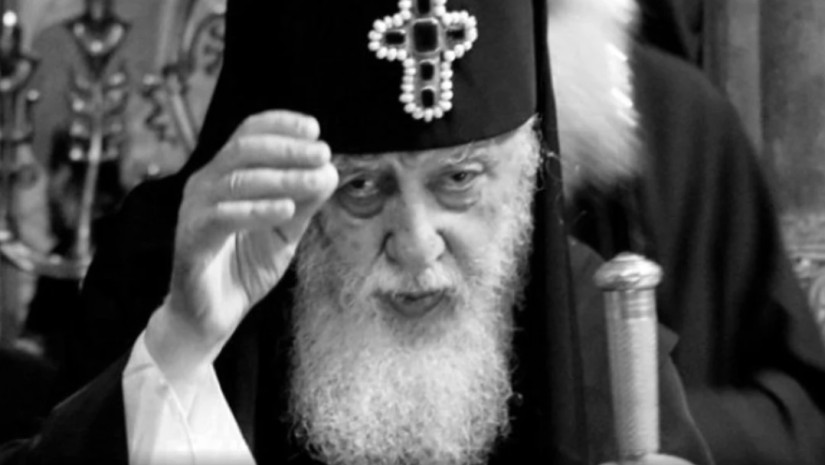
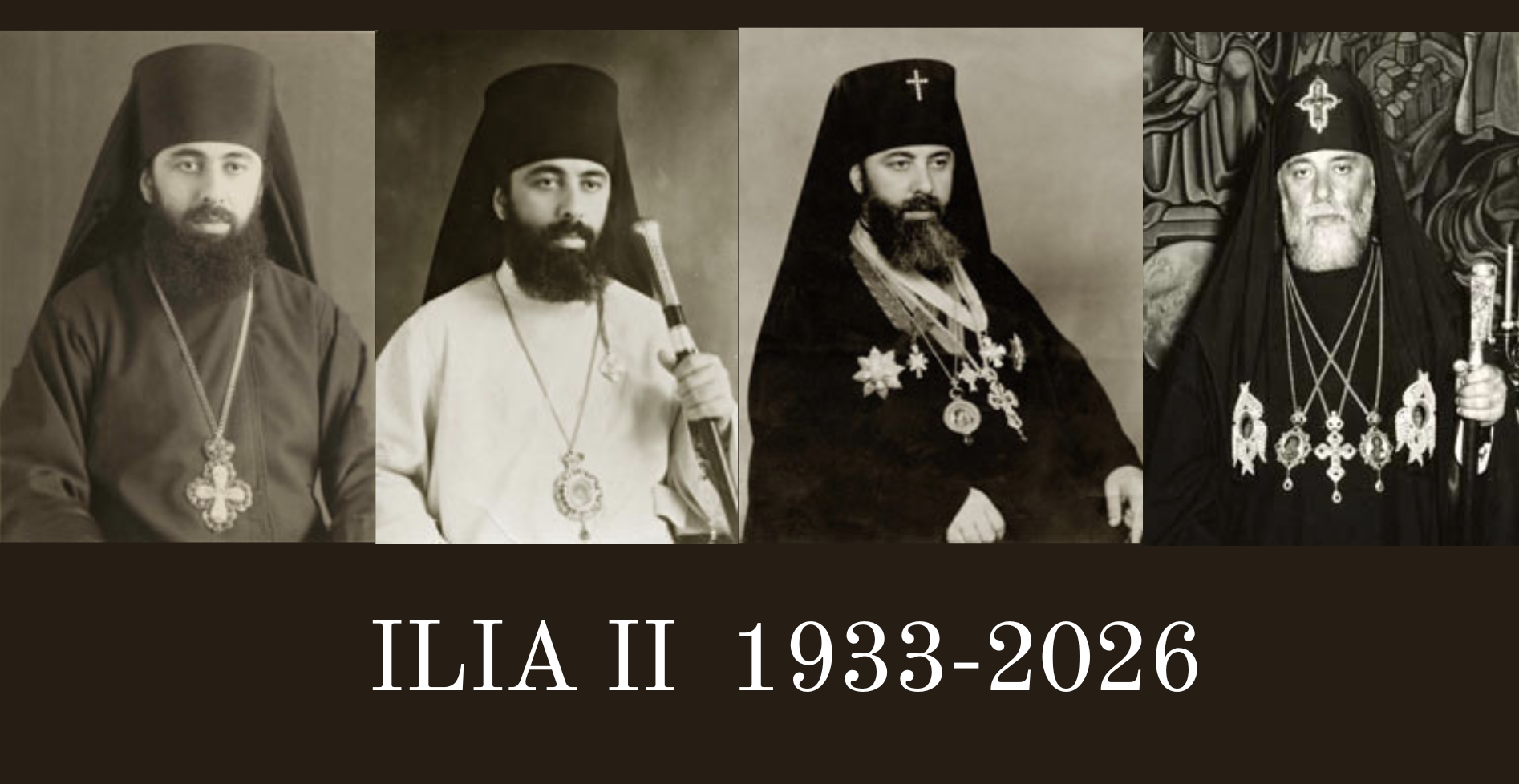
On 17 March 2026, His Holiness and Beatitude Ilia II, Catholicos‑Patriarch of All Georgia, passed away aged 93.
BRAMS Institute expresses profound condolences to the Georgian nation, the Orthodox world and representatives of all other faiths, whom he served and respected with unconditional Christian love, regardless of origin or belief.
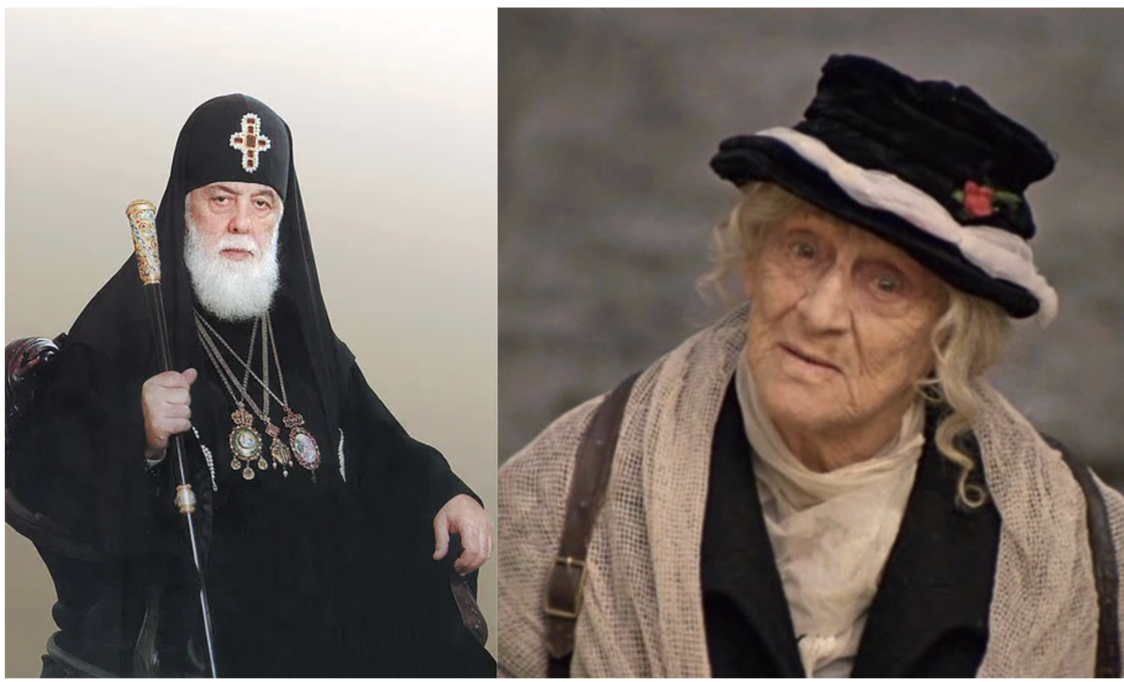
“Earthly life is only a level. The main one is up there; our homeland is there too — Great Georgia is up there,” Ilia II told the distinguished Georgian actress Veriko Anjaparidze, who in the film Repentance conveyed timeless wisdom with the immortal line, “What use is a road if it does not lead me to the temple?” For us, mortal members of the Patriarch’s flock, Ilia II was the road that led Georgia to the temple and freed it from the Godless oppression of the Soviet regime.
Future spiritual leader of all Georgia, Ilia was born in Vladikavkaz on 4 January 1933 to Giorgi Gudushauri‑Shiolashvili and Natalia Kobaidze. The Gudushauri family name dates back to antiquity. In the reign of King Vakhtang I of Georgia, a warrior named Sno distinguished himself in battle; the king baptised his son, naming him Gudushauri, and erected a fortress in the child’s name.
Known as outstanding warriors, the Gudushauri family traditionally lived in a valley. Shiola Gudushauri, who lived in the early seventh century, was noted for his bravery. He owned the Gudushauri Valley, which encompassed Achkhoti and several villages: Sno, Akhaltsikhe, Karkucha, and the surrounding area. To preserve Shiola Gudushauri’s name in history, some of his direct descendants adopted a surname derived from it: Shiolashvili (literally “offspring of Shiola”). Tradition holds that Shiola’s mother belonged to the Bagration royal house and was regarded as a lady of the royal household. There are also accounts of kinship between the Gudushauris and the noted Georgian writer Vazha-Pshavela. One of Shiola Gudushauri’s descendants became Catholicos-Patriarch of All Georgia. His Holiness and Beatitude Ilia II descended from this line.
In 1927, Giorgi and Natela, the parents of the future Patriarch, bought a house in Vladikavkaz and moved there temporarily. The Georgian Church of Dzaug (Vladikavkaz) was then under the jurisdiction of the Catholicos‑Patriarch of Georgia. On Christmas Day, a three‑day‑old infant was baptised in this church and given the name Irakli in honour of noble Georgian King Erekle II.
In 1952, Irakli Shiolashvili‑Ghudushauri graduated from Vladikavkaz Secondary School No. 22 and went on to the Moscow Theological Seminary in Sergiev Posad (then Zagorsk), where he completed his education with a first‑class diploma. As a top student, he was admitted to the Moscow Theological Academy. On 16 April 1957, with the blessing of Catholicos‑Patriarch Melchizedek III of Georgia, a 24-year-old Georgian was tonsured a monk in Tbilisi’s Alexander Nevsky Cathedral by Bishop Zinoby (Mazhuga) and took the name Ilia.
While still at the Academy, in his fourth year, Ilia submitted a thesis, “History of the Iverian Monastery of Mount Athos”, for which he was awarded the degree of Doctor of Theology. He graduated from the Moscow Theological Academy in 1960 with a first‑class diploma; the Academy Council offered him a professorial scholarship and the opportunity to lecture at the seminary and academy. He instead returned to Georgia to work in clerical training. At first, he was ordained a priest at Batumi Cathedral. On 19 December 1960, he was elevated to the rank of abbot, and on 16 September 1961 to that of archimandrite. In 1963, during the Khrushchev period, when many seminaries, churches and monasteries in Russia were closed, Ephrem II, Catholicos-Patriarch of Georgia, succeeded in establishing a theological school in Mtskheta, modestly titled as “Theological Courses”. Archimandrite Ilia was appointed the first rector of the Mtskheta Theological Seminary (1963–1972).
On 26 August 1963, with the consecration of the hierarchs of the Georgian Church by Catholicos‑Patriarch Ephrem II, Archimandrite Ilia was ordained Bishop of Batumi‑Shekomedeli and appointed chorepiscopus (choreographer) to the Patriarch. After seven years’ service in Adjara, and with the Patriarch’s blessing, he was transferred in 1967 to the Bishop of Tskhum‑Abkhazia. He was raised to the rank of Metropolitan in 1969 and served as Metropolitan of Sukhumi for eleven years.
In 1977, Catholicos-Patriarch of All Georgia David V (Devdariani) died. On 9 November 1977, the Holy Synod elected Metropolitan Ilia of Tskhum‑Abkhazia as Catholicos‑Patriarch. He was enthroned on 25 December 1977. At that time, the Church had few active parishioners and only small congregations attended services; Ilia II’s presence attracted wider public interest, drawing members of the educated people, such as intellectuals and young students, to Svetitskhoveli Cathedral. This renewed public engagement is widely regarded as marking the beginning of a broader national revival that eventually contributed to Georgia’s move away from Soviet control.
In 1990, after long and tireless efforts by His Holiness and Beatitude Ilia II, the Ecumenical Patriarchate issued a formal act of confirmation, thereby restoring historical justice and securing recognition throughout the Orthodox world of the autocephaly of the Holy Church of Georgia.
In 1988, he oversaw the transfer of the Mtskheta Theological Seminary to Tbilisi and the foundation of the Tbilisi Theological Academy and Seminary. The ancient Gelati theological and scientific academies were revived. The Church opened numerous theological schools and gymnasia nationwide and established theology departments in several secular universities, where graduates of the Tbilisi Academy now teach.
With his blessing, the Bible, theological collections, church magazines and newspapers, calendars and other theological works were published in modern Georgian. The Patriarchate created departments for mission and evangelisation, folk crafts, foreign economic affairs, finance and administration, the preservation of holy sites, agriculture, healthcare and social welfare. A press centre, a centre for the restoration and study of architecture, a church chant department and an educational committee were also founded. Since 2001, the Patriarchate’s radio station Iveria has broadcast throughout Georgia, including Abkhazia. The Patriarchal Residence regularly hosts conferences where clergy and scholars address pressing national issues.
The Patriarchate under Ilia II promoted numerous social and pastoral initiatives: the youth organisation Dzvelai; the charitable foundation Lazarus, which assists socially vulnerable groups; a shelter for the elderly; a charity house; and orphanages in Dzegvi, Bediani and Zestaponi, where monasteries provide care for orphaned youngsters.
Ilia II visited Georgians in Fereydan who had been separated from their homeland for over three centuries — an opportunity earlier first hierarchs had been unable to realise — and strengthened ties with Georgian communities in Turkey, Saingilo and other foreign lands. With his blessing, many churches and monasteries were reopened and new churches built across Georgia. At his enthronement, there were only 48 functioning churches nationwide; after a quarter of a century, this figure had risen to approximately 800. The clergy increased from roughly 40 at the start of his patriarchate to about 1,000 by the early 21st century, and the number of dioceses expanded to 30. The historic diocese of Tao‑Klarjeti was revived, and a Metropolitanate of Western Europe was established.
Ilia II visited Georgians in Fereydan (in modern Iran), who had been separated from their homeland for over three centuries — a visit earlier heads of the Georgian church had been unable to make — and strengthened ties with Georgian communities in Turkey, Saingilo and elsewhere. Under his blessing, many churches and monasteries were reopened and new churches built across Georgia. At his enthronement, there were about 48 functioning churches nationwide; after a quarter of a century, that number had risen to roughly 800. The clergy grew from about 40 at the start of his patriarchate to some 1,000 by the early 21st century. The number of dioceses increased to 30. The historic diocese of Tao‑Klarjeti was revived, and a Metropolitanate of Western Europe was established.
Catholicos‑Patriarch Ilia II received the highest honours from the patriarchates of Constantinople, Jerusalem, Alexandria, Russia, Bulgaria, Serbia, and from nearly all Orthodox churches. He was awarded the title of Doctor of Theology by the New York Theological Academy and received the same degree from the Academy of Sciences of Crete in 1997.
A landmark event in Georgia’s recent history was the signing of a constitutional agreement between the State and the Church on 14 October 2002 at Svetitskhoveli. The agreement restored historical justice after the annulment of the Georgian Church’s autocephaly following annexation by the Russian Empire. After the restoration of Georgia’s independence, the Church’s place in national life was reaffirmed in law. This legal recognition enabled the nation, the Church and the population — long occupied since 1801 for almost 190 years — to determine and build their own future.
After each liberation from an enemy, Georgian monarchs built a church or a monastery to symbolise regained freedom, national unity and a return to independent life. With that political and spiritual purpose, Svetitskhoveli Cathedral and Jvari Monastery were erected in Mtskheta, and Bagrati Cathedral in Kutaisi. His Holiness and Beatitude Ilia II continued this tradition. Through his prayers, blessings and efforts, the Holy Trinity Cathedral was built in Tbilisi as a sign of the nation’s repentance before God. It is in this cathedral that the funeral service will be held for Ilia II, and the people of Georgia — and others — will now pay their respect and bid farewell to the venerable spiritual father.