
18
Jan
Detroit on The Grand Tour
The first episode of the third series delves into the once-great Motor City.
Jeremy Clarkson, Richard Hammond, and James May take three muscle cars—the 2018 blue Dodge Challenger SRT Demon, the red Ford Mustang RTR, and the black Chevrolet Hennessey Camaro Z1 The Exorcist—on a drive through the deserted streets of Detroit. They discuss the city’s current state and compare it to its glorious past.
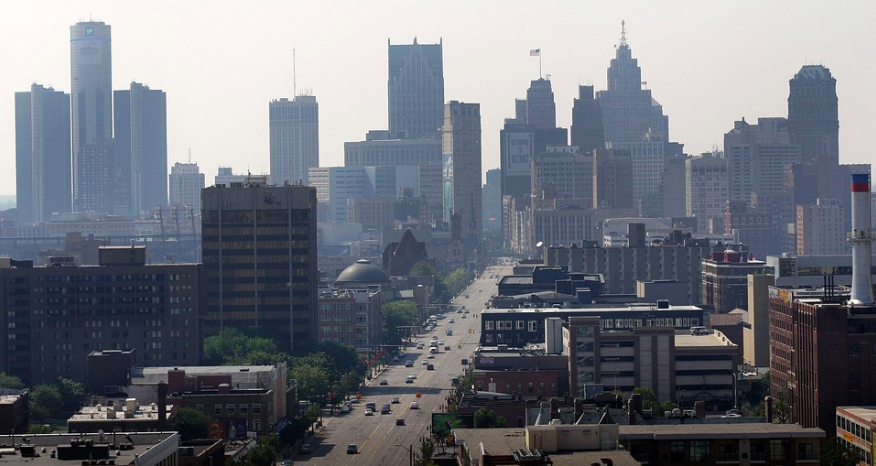
Founded on 24th July 1701, Detroit is the oldest city west of the original thirteen colonies, located on the western side of the Mississippi River. Antoine de la Mothe Cadillac named the city "Detroit," which translates to "the strait" in French, referring to the Detroit River. Notably, the Detroit River serves as a passageway connecting two larger bodies of water: Lake Huron and Lake Erie, which together form the natural border between the United States and Canada.
Detroit is the only major American city located north of Canada, making it unique in that it faces Canada from the south. As a result, some Canadians must drive north to reach Detroit.
According to The Detroit Almanack, there are at least eleven other places named "Detroit" in the United States, including towns in Alabama and Maine, as well as a village in Illinois.
Detroit is known for a variety of nicknames, including The D, Motown, The Motor City, The Paris of the Midwest, Arsenal of Democracy, The 313 (named after its telephone area code), City of Champions, America’s Comeback City, City of Trees, City of the Straits, The Renaissance City, Hockeytown (a trademark owned by the Red Wings), Rock City (inspired by the Kiss song “Detroit Rock City”), and Hitsville (USA). On average, Detroit residents consume 3.2 kilograms of potato chips per year, while the rest of the country consumes about 1.8 kilograms annually. Consequently, one of the lesser-known nicknames for Detroit is The Potato Chip Capital.

In addition to housing the headquarters of Ford, Chrysler, and General Motors, Detroit is celebrated for its achievements in transportation innovation.
The first car was manufactured in Detroit in 1896, followed by the introduction of the first concrete-paved road in 1901 and the first freeway in 1942. In 1928, the Detroit-Windsor Tunnel became the first international traffic tunnel, providing a shortcut for cars travelling between the United States and Canada beneath the Detroit River. The opening of Northland Mall in 1957 also popularised the practice of driving to shopping centres.
8 Mile Road in Detroit serves as a literal racial dividing line between the predominantly Black inner city and the mostly white suburbs. The Ambassador Bridge, which connects Windsor, Canada, to Detroit, is the busiest single border crossing in North America. Detroit has deep roots in the automotive industry and features a driverless monorail system that transports approximately 2.4 million passengers each year.
Detroit is notable for being home to the world’s first four-way, three-colour traffic light. Police officer William Potts, nicknamed "Mr Traffic," adapted the colour yellow from railroad signals and incorporated it into the traffic light design. The first use of the yellow light in a traffic signal occurred at the intersection of Woodward Avenue and Jefferson Avenue in 1922.
While Detroit is known as the Motor City, it has made several significant contributions beyond automobiles.
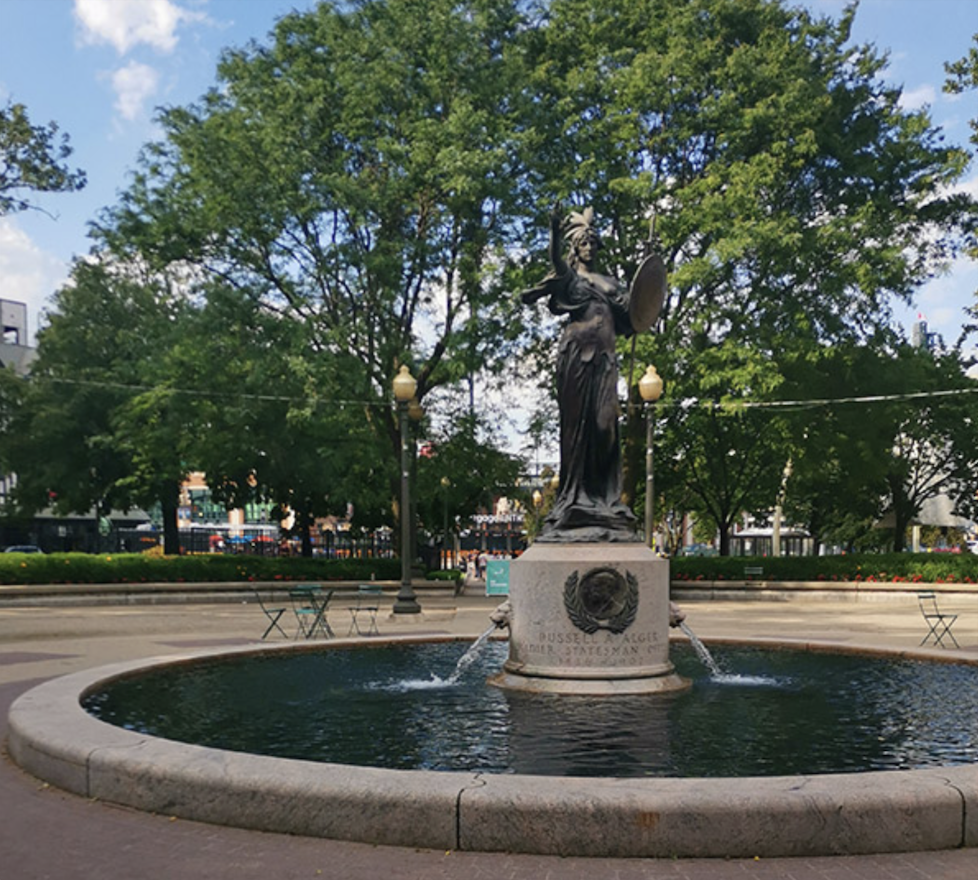
The 72-storey Marriott at the Renaissance Centre in Detroit is the second-tallest hotel in North America; when it opened in 1977, it was the tallest hotel in the world.
In 1879, Detroit became the first city to assign individual phone numbers, rendering the party line obsolete.
Detroit is home to the only floating post office in the United States, the J.W. Westcott II. Established as a small maritime reporting agency on the Detroit River, it provided cargo vessels with information about port conditions. In 1948, it evolved into a fully-fledged post office, earning the world’s first floating ZIP code: 48222.
Another fun fact is that the oldest soda in America, Vernor’s Ginger Ale, was created in Detroit. Legend has it that this refreshing drink was born by accident. Local pharmacist James Vernor crafted a beverage but could not sell it because he had to serve in the Civil War in 1862. He stored the drink in an oak cask, and upon returning home after the war, he discovered that the keg had transformed his concoction into what we now know as Vernor’s Ginger Ale.

Detroit boasts a rich musical heritage. It is renowned as the birthplace of techno music, which emerged in the early 1980s. Each year in late May, the city hosts the Detroit Electronic Music Festival, known as "Movement," at Hart Plaza. While Detroit cannot claim to have originated jazz, it is home to the entirely free annual Detroit Jazz Festival. Other significant music events in the city include the Motor City Music Conference (MC2), the Urban Organic Music Conference, the Concert of Colours, and the hip-hop Summer Jamz festival.
Many celebrities are associated with Motown, including Diana Ross, Alice Cooper, Suzi Quatro, Jerry Bruckheimer, Eminem, Madonna, Stevie Wonder, Aretha Franklin, Marvin Gaye, Aaliyah, Kid Rock, Juan Atkins, Derrick May, Kevin Saunderson, Jeff Mills, Smokey Robinson, Donald Byrd, Andre Williams, Nathaniel Mayer, Danny Brown, Big Sean, The Supremes, The White Stripes, The Temptations, The Four Tops, The Miracles, Martha and the Vandellas, The Spinners, and Nolan Strong & the Diablos.
In 2011, the Detroit Symphony Orchestra faced a severe financial crisis. Kid Rock decided to host a benefit concert, calling it "the best-drunk move I ever made." He raised over one million dollars for the orchestra, providing significant support for classical music in Detroit.
Interestingly, there is no actual area known as South Detroit; Steve Perry coined the term purely for the sake of rhyme in his lyrics for the song “Don’t Stop Believin’”.

People commonly refer to the night before Halloween as Devil's Night. In the early 1940s, typical pranks included egging, soaping or waxing windows and doors, throwing rotten vegetables, and lighting flaming bags of dog faeces on front porches. However, by the 1970s, these mild pranks had escalated, particularly in the inner city, leading to more destructive acts, including arson. Notably, people set more than 800 fires in 1984. In response, Detroit city officials organised Angels' Night at the end of October in 1995, attracting around 50,000 volunteers to patrol neighbourhoods. By 2015, the city recorded the lowest number of fires, with only 52 incidents. In 2018, there were just five structure fires on Devil's Night and four the night before.
The Ford Rotunda in Detroit was once a tourist attraction more popular than the Statue of Liberty in New York. Built for the 1934 World’s Fair, it was the fifth most-visited site in the US before it tragically burned to the ground in 1962.

The Packard Automotive Plant in Detroit is the largest abandoned industrial facility in the world. In 2017, Arte Express held a promising ceremony for Phase I of the renovation project, which will include the restoration of the former administrative building on the site.
Since 1989, a non-profit organisation has planted over 81,000 trees in Detroit. This group promotes urban farming and works to reclaim vacant lots for new green spaces. Interestingly, the Detroit Zoo was established after a circus arrived in the city and subsequently went bankrupt.
In the early 1960s, Detroit had the highest per capita wage of any city in America. However, by 2009, the city experienced a higher unemployment rate than during the Great Depression, with nearly half of Detroit’s adults being functionally illiterate.

Crime has become so pervasive that police warn visitors to "enter Detroit at your own risk." On average, it takes the Detroit police more than 58 minutes to respond to a call, while the national average is just 11 minutes. Most police stations in the city are now closed to the public for 16 hours each day. While there were around 5,000 police officers in the city about a decade ago, only 2,500 remain, with an additional 100 scheduled to be eliminated from the force in the near future. As a result, the murder rate in Detroit is 11 times higher than that of New York City, and around 70% of local murders remain unsolved.
Reports indicate that gangs of young men armed with AK-47 rifles are terrorising gas stations throughout the city. The term "carjacking" originated in Detroit, Michigan. At one point, 100 bus drivers refused to follow their routes due to fears of being attacked on the streets in broad daylight. Although there are over 85,000 streetlights in Detroit, thieves have stolen so much copper wire from them that more than half are no longer functional.

The city spends more money issuing parking fines than it collects from them. In 2013, Detroit even temporarily ceased issuing death certificates because it ran out of paper.
People are continually leaving Detroit. The city currently has 70,000 abandoned buildings, 33,500 empty houses, and 91,000 vacant residential lots. As of January 2013, there were 47 houses listed for sale at $500 or less, including five properties priced at just $1. For several years, a unique but seemingly desperate offer has been available online for foreigners wishing to settle in the U.S.: homes are provided to individuals who can demonstrate a stable employment history, cash flow, and renovation plans.
On 4th February 2013, contributor Michael Snyder of Activist Post wrote: “If you want to know what the future of America is going to be like, just look at the city of Detroit. Once upon a time, it was a symbol of everything that America was doing right, but today it has been transformed into a rotting, decaying, post-apocalyptic hellhole. Detroit was once the fourth-largest city in the United States, and in 1960, it had the highest per capita income in the entire nation. It was the greatest manufacturing city the world had ever seen, and the globe regarded Detroit with a sense of awe and wonder. But now, the city of Detroit has become a bad joke to the rest of the world. Back during the boom years, Detroit was known for making great cars. Today, it is infamous for scenes of desolation and decay, filled with vandalised homes, abandoned schools, and empty factories. But don’t look down on Detroit, because the truth is that Detroit is really a metaphor for what is happening to America as a whole. Detroit may have experienced this decline first, but the rest of the country will follow soon enough.”

Once a vibrant American city during the 1960s and 1970s, Detroit still has historic districts worth living in and visiting, such as Downtown, Corktown, and Midtown. The stark contrast between Detroit's past glory and its current challenges vividly highlights the city's situation in the first episode of The Grand Tour. Despite the show’s car-focused format, the presenters address nearly every major issue facing Detroit, using British humour to soften the impact of their observations.

Detroit’s official motto, “Speramus Meliora; Resurget Cineribus,” translates from Latin as “We hope for better things; it shall rise from the ashes.” This quote, attributed to Father Gabriel Richard, a French priest, perfectly encapsulates modern Detroit as the city continues to aspire to reclaim its former prosperity.
